A Course In Everyone’s Favorite Beverage
When humans started brewing beer thousands of years ago they of course never bottled or shipped their beverages. Beer is designed to be enjoyed as close to the brewery as possible. In order to bottle and ship beer additives and preservatives may have to be added, or often times the beer is pasteurized (killing the yeast so that it is no longer a fresh living beer) so the product doesn’t spoil. Exposure to light, temperature changes, and even excessive motion can damage a beer. Obviously some or all of these problems will occur when a beer is packaged and removed from the brewery at which it was created. In keeping with our philosophy of serving the finest, freshest, and purest foods and beverages, Lily’s Seafood Grill & Brewery brews an exciting, selection of beers in our brewery. We never add artificial preservatives or additives and we certainly don’t have to pasteurize our products. The beer goes directly from our refrigerated serving tanks to the bar tap head and into your pint glass.
Another advantage of brewing, in house is the ability to create beers available nowhere else but Lily’s. We serve a regular line-up of 11-12 beers. These beers are brewed in traditional styles from around the world. Our beers are unlike any others.
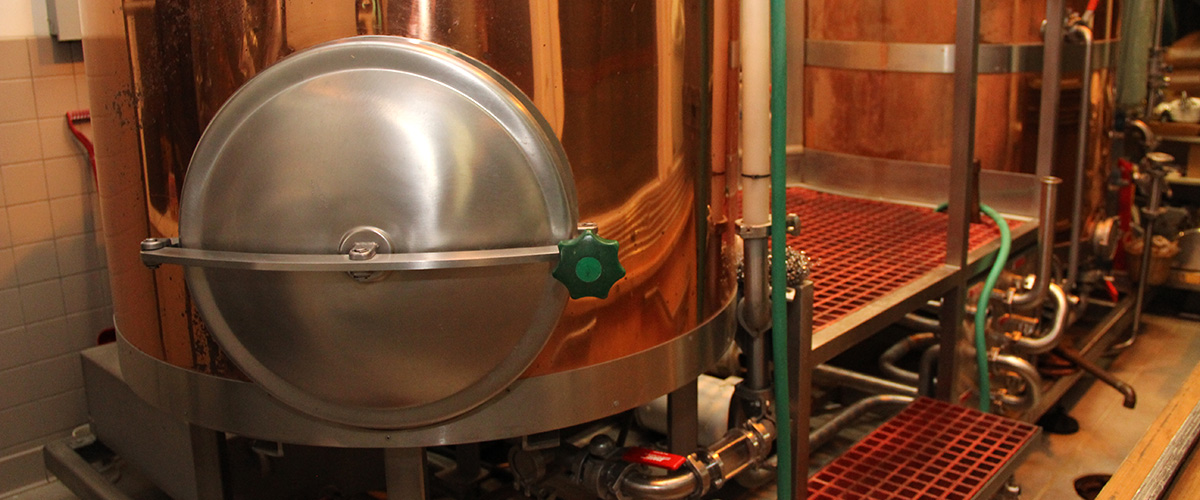
How the Beer is Produced
The brewing, process can be divided into several parts. First, a sweet liquid called wort, (pronounced “wert”), is prepared from malted barley. This liquid is then boiled with hops for bitterness. Finally, yeast is added to cause fermentation and it produces carbon dioxide and alcohol as by¬products. The result is beer. It’s really fairly simple; people have been doing it in one form or another for over 5,000 years. The following, is a brief summary of the brewing process at Lily’s.
Malting
The first step is turning raw barley, (we use 2-row), into malt. The malting process consists of sprouting raw barley and then kilning it slightly to dry it out. This does two things: it softens the hard starches inside the grain, making them soluble and it causes enzymes to be produced inside the kernels, (this will be important in the next step). Very few breweries do their own malting. Our barley is malted at Briess Malting Company. The grain is then cracked to expose the starchy material inside the husk. This process is called milling.
Mashing
The brew day begins by measuring, out the malted barley, (approx. 250 to 400 pounds per brew). Our standard brews contain from two to as many as seven different types of malt. The Grist (milled barley) is then mixed with hot water in the mash tun. The result is a thick slurry of grain and water called the mash, and it is held at a temperature between 150 to 156 degrees Fahrenheit for 45 min, to an hour. Both temperature and time depend on the type of beer being brewed. The starches in the grain dissolve and the enzymes are activated. They begin to convert the long starch molecules into a variety of smaller sugar molecules called dextrins. Portions of these dextrins are further broken down into even simpler sugar molecules, such as maltose.
In a proper environment, (temperature and pH being the most important), all of the starch molecules will be broken down and the mash becomes sweet. Yeast has a very limited diet; in this mix of sugars only the simple sugars can be fermented. The dextrins will be left behind, contributing to the body and flavor of the beer. The ratio of these unfermentable dextrins to the fermentable simple sugars is important in determining the character of the finished beer. The temperature of the mash controls this ratio: higher temperatures create more dextrins, leading to a fuller bodied, sweeter beer. Lower mash temperatures favor the production of simple sugars leading to a drier, more refreshing beer.
Sparging/Lautering
The next step is rinsing the sweet liquid of the grains with hot water (Sparging) while draining the liquid out through strainer plates in the bottom of the mash tun (lautering). The liquid, now called wort, (pronounced “wert”), is transferred to the brew kettle. This transfer process is known as “running off”.
Boiling
Once in the brew kettle, steam from a boiler in the basement brings the wort to a vigorous boil for about 75 minutes. At several specified times during the boil, hops are added. The boil achieves several things: it precipitates unwanted proteins (hot break), sterilizes the wort. and extracts bitterness, flavor and aroma from the hops.
The time at which the hops are added to the boil is important. Hops added early in the boil contribute bitterness to the finished beer, but the delicate aromas are driven off with the steam. Hops added late in the boil contribute less bitterness, but the aromatics are retained. At Lily’s, we use many types of hops from around the world. Different types of hops contribute different aromas and degrees of bitterness. We will be using hop pellets because of their extended shelf life. Hop pellets are simply ground hops.
Fermentation
After the boil the wort must be transferred into a fermenter in the basement. We have seven stainless steel uni-tank fermenters, 4-10 barrels and 3-7 barrels in capacity. In order for the yeast to be added to the wort, it must be cooled (65-68 degrees for ales, 50-55 for lagers). In order to cool it quickly, it is passed through the heat exchanger. The heat exchanger is the small blue tower located on the far right hand corner of the brew house. Once the cooled wort is filling the fermenter, the yeast is added or “pitched”. Fermentation begins shortly after the yeast is added and is evidenced by the rapid billowing of carbon dioxide from the airlock on the fermenter. Within five to seven days for ales, or seven to ten days for lagers, most of the sugar has been fermented. Because our fermenters are pressure vessels, they can be safely capped at this time, causing carbon dioxide pressure to build inside. This forces carbon dioxide into solution, thus naturally conditioning (carbonating) the beer.
The shape of our fermenters is important. Sediment, which could impart undesirable flavors over time, collects in the steep conical bottom of the fermenter and is removed as necessary. The fermenters are also thermostatically controlled so the temperature can be carefully regulated during the entire fermentation process.
Maturation
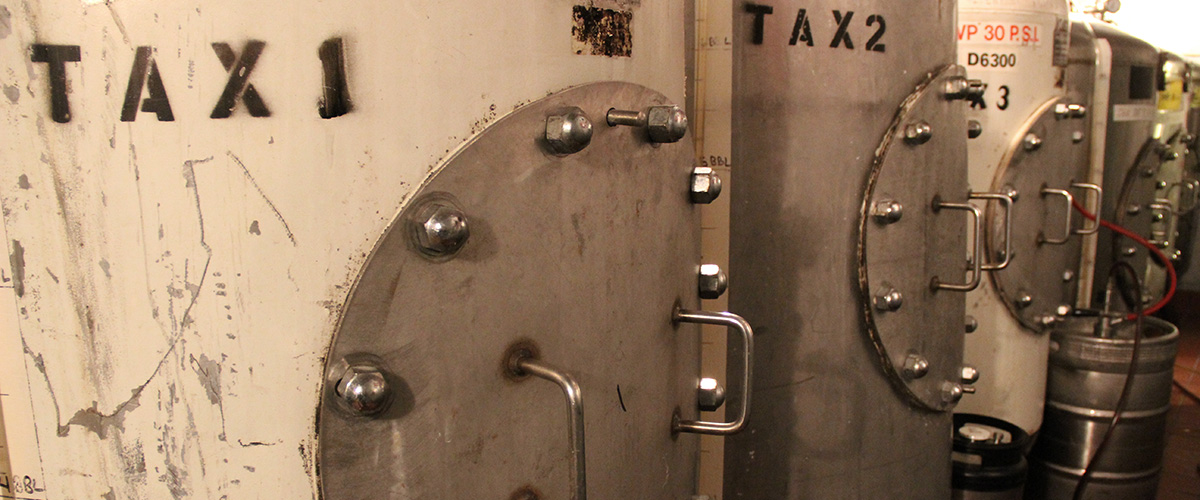
After fermentation is complete the temperature of the beer is gradually dropped to about 36 degrees. At this temperature, the remaining yeast settles out and is either re-pitched into another batch or removed from the fermenter. The beer is then filtered (except for Whitefish Bay Wheat and some specialty beers) and transferred to the serving tank room. We have nine 7 barrel serving tanks which are connected directly to the tap heads at the bar.
Commonly Asked Questions About Beer
How is beer made?
All alcoholic beverages start with the addition of yeast to a sugar-laden liquid. The yeast consumes the sugar and produces carbon dioxide (CO2) and alcohol as by-products. This process is called fermentation. The source of sugar determines what the beverage will be. For example, if the sugar comes from fruit juice, the result of fermentation is called wine. Grains can also be a source of sugar: by steeping, crushed malted barley in hot water, a natural conversion takes place which turns starches in the grain into fermentable and unfermentable sugars. The resulting sweet liquid, called wort, is separated from the grain, boiled with hops, to provide bitterness, additional flavor and aroma, and fermented, the result is beer. The carbonation comes from capping the fermentation vessel before fermentation is complete so that the CO2 produced by the yeast is held in solution instead of escaping. Additional CO2 can be added after filtration to bring each beer to its desired carbonation level.
How much beer is made in each batch?
Each batch is 5 barrels or 10 kegs or 155 gallons (or more importantly, 1240 pints).
What is the difference between Ales and Lagers?
Beers fall into two broad categories, depending on which of the two species of yeast is used. Ales are made with “top fermenting” yeast (saccharomyces cerevisiae), which prefer relatively warm fermentation temperatures.
Lagers are made with “bottom fermenting” yeast (saccharomyces uvarum or carlsbergensis), which prefer cooler, longer fermentation, and require a longer conditioning and maturation period. Ales tend to be fruitier and estery, while lagers are generally considered to be crisper and cleaner tasting.
How long does it take to make beer?
The process varies from brewery to brewery and beer to beer. At Lily’s, our ales take three to four weeks; when we serve a lager it will require between five to nine weeks.
What are the ingredients in beer?
In our brewery the answer is simple: malt, water, hops and yeast. Other grains, such as rye and oatmeal, will be used on occasion and we’ll update you on that. Our water is Detroit Municipal. The hops used come from around the world. Our domestic hops are primarily gown in Washington and Oregon. We also use hops from England, Yugoslavia, the Czech Republic, and Germany. In addition to adding flavor and aroma to the beer, hops also act as a natural preservative. Our yeast is re-pitched from batch to batch. Our yeast strains are obtained from Wyeast Labs in Mt. Hood, Oregon.
What The Heck Do Those Letters & Numbers Mean?
O.G.
Original gravity, or the amount of sugar in the beer wort prior to the addition of the yeast. The gravity is determined with a device called a hydrometer which measures the density of a liquid and compares it to water, (water is 0 degrees plato [plato is the unit of measurement we use]). Remember we never add sugar to our beer; it is naturally created during the brewing process via a starch to sugar conversion which occurs in the mash tun.
A.E.
Apparent extract or, for practical purposes, terminal or final gravity. Simply stated this is the amount of sugar that remains in the finished beer after the yeast has consumed all of the fermentable sugars and converted it into its by-products, alcohol (primarily ethanol) and CO2. Beers with higher A.E.’s will generally have more body (residual sweetness [unless balanced — with higher levels of bittering units, See B.U.’s]) and those with lower A.E.’s will usually have a crisper drier finish.
A.B.V.
Alcohol by volume which is determined by using a simple formula to give you a fairly accurate idea of the alcohol content.
(O.G. – A.E.) x .4167 = alcohol by weight x 1.256 = A.B.V.
Ex.: (16 – 2) x .4167 = 5.8 % A.B.W. x 1.256 = 7.3% A.B.V.
B.U.’s
Bittering units, or more accurately International bittering units because this is a unit of measurement that brewers use worldwide. Simply stated, B.U.’s measure the amount of alpha acids that are extracted from the hops when they are added to the wort during the boil. All hops have different alpha acid levels and the amount of acidity extracted from them depends on when they are added to the boiling wort. Hops added early in the boil impart more bitterness to the finished beer while hops added near the end contribute less acidity but lend the beer their flavor and aroma.
It’s very important to understand that a beer with a high B.U. number doesn’t always mean that the beer is going to be bitter. Our A. Strange Oatmeal Stout is a perfect example. The B.U.’s for this beer are listed at 52, which is quite high, but you’ll notice that the A.E. for this ale is 4. Because there is a higher level of un-fermented sugar it takes more B.U.’s not to make the beer bitter but to balance the flavor so it is not too sweet. If we were to take that same 52 B.U.’s and use it in our Lily’s Propeller Island Pilsner which has an A.E. of 2, you would go well beyond balancing it and have a very bitter lager indeed.
It’s also important to remember that the B.U.’s don’t really tell you anything about how hoppy a beer is. When someone uses this term they are usually referring to the hop aroma that a beer may or may not possess. As always if you have any questions please feel free to ask.